How to start selling on Whatnot
Whatnot is the biggest live-shopping marketplace in the US for trading cards, collectibles, fashion and toys. Signing up is free, the app handles payments and shipping labels, and buyers are already in the app looking for shows. This guide covers how it works, what it costs, how to get approved and how to run a first show that does not fall apart.
Why Whatnot works for new sellers
Whatnot is a marketplace first and a video app second. Buyers open it to shop: they follow categories, browse scheduled shows and get notified when a seller they like goes live. Whatnot's seller page (September 2026) says more than 650,000 people join every week, so a brand-new seller with zero followers can still get eyes on a show through category browsing alone.
The audience skews collector and hobbyist. The biggest categories are trading cards, fashion, toys and collectibles, LEGO, luxury bags, sneakers and beauty. If your product fits one of those lanes, you are selling to people who came to the app to buy exactly that.
Payments, shipping labels and buyer messaging are all built into the app. You do not need a website, a payment processor or a separate label service to run your first show.
- Auctions: the default format. Set a starting bid and a timer and let the room bid it up.
- Buy It Now: fixed-price listings that buyers grab instantly during a show.
- Flash Sales: a short, limited-quantity sale at a set price to create urgency.
- Storefront: your listings stay shoppable between shows.
- Giveaways: a built-in tool for pulling viewers into the room and keeping them there.
What Whatnot costs
Signing up is free and there are no monthly fees. Whatnot earns when you sell: a commission of up to 8% of the sale price (it varies by category and country) plus payment processing of 2.9% + $0.30 per order. High-volume sellers can see commission drop as low as 3%.
Example: a $20 auction win at 8% commission costs $1.60 in commission and $0.88 in processing. You keep about $17.52 before the cost of the item and packaging. Run that math on your expected average sale before you buy inventory, not after.
Buyers usually pay shipping, and Whatnot generates the label. When one buyer wins several items in a show, the items are bundled into a single shipment. That is why every experienced seller repeats "buy more, ship once" during the show.
Fees change. Check Whatnot's current seller terms before you set prices.
Getting approved to sell
Applications happen inside the app. Approval time varies by category and by how complete your application is; categories with heavy counterfeit risk, like trading cards and luxury goods, may ask for more detail or proof of inventory.
- Download the Whatnot app and create an accountUse the name you want buyers to see. Your handle becomes your storefront and is hard to change later.
- Tap "+ Sell" and start the seller applicationYou will be asked what you plan to sell and how much inventory you have. Be specific: "sealed Pokémon booster boxes and ETBs" beats "cards".
- Complete Seller 101A short orientation on how shows, shipping and buyer protection work, followed by a quiz. Plan on 20 to 30 minutes.
- Link your payout accountAdd a bank account for payouts and complete identity verification when asked.
- Set your ship-from address and shipping preferencesYour ship-from address determines the label prices buyers see at checkout.
- Read the current seller terms for your categoryCategory rules, fee tiers and shipping windows change. Read them once before your first show so nothing surprises you.
Pricing and formats that work for a first show
Whatnot rewards momentum. Sellers usually open with fast, cheap items to get the room bidding, then move into feature items once there are 20 to 50 people watching.
Start auctions low enough that someone bids in the first ten seconds. A $1 start on a $3 squishy or a $5 start on a blind box is normal. The room sets the price; your job is to keep the pace up and keep talking.
Use Buy It Now for anything you cannot afford to let go cheap: sealed cases, higher-end figures, curated bundles. Use giveaways at the start and after slow stretches, not every five minutes.
- Group items by price band so the show has a rhythm: openers under $10, mid items $10 to $30, features $30 and up.
- Say the shipping bundle rule out loud every 15 minutes: one label per buyer per show.
- Keep one chase item visible on the table all show and announce when it is coming up.
- Decide your floor prices before you go live. Do not renegotiate with yourself on camera.
Shipping on Whatnot
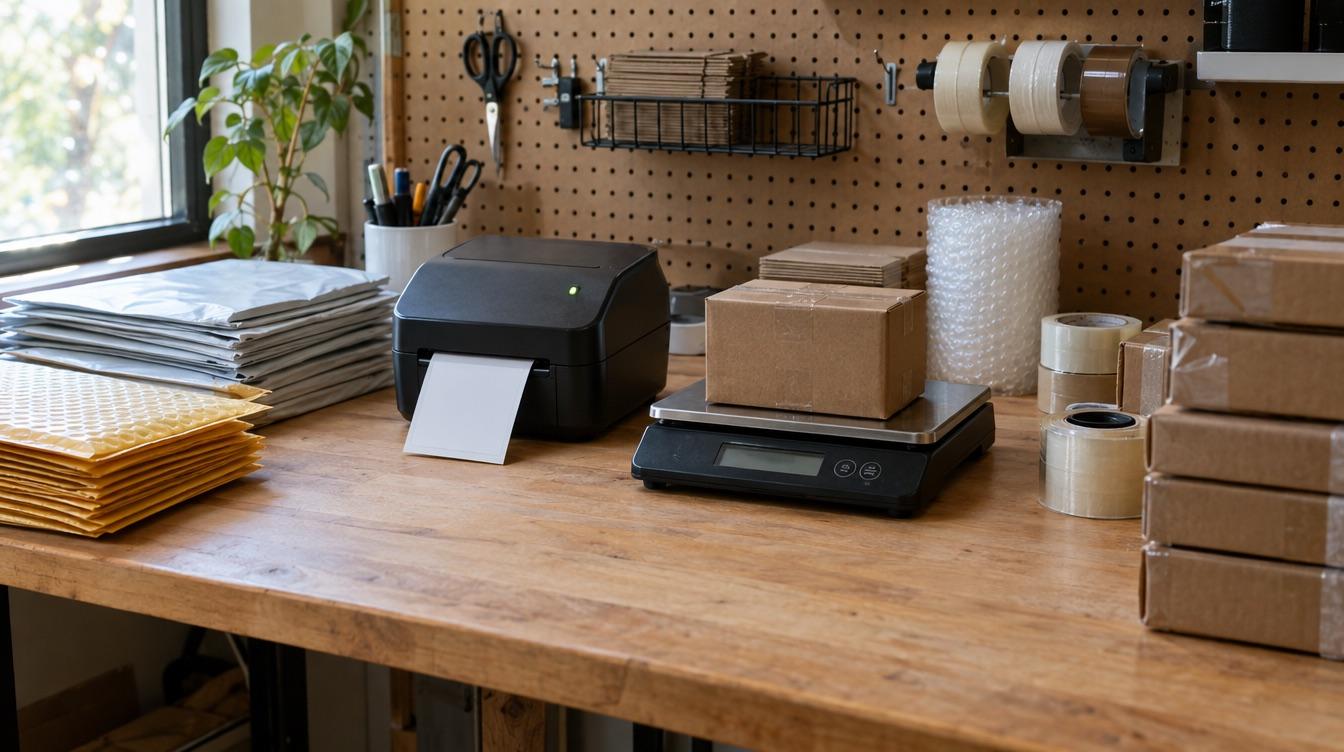
After the show, the app lists every buyer with their bundled items. You pack, print the label Whatnot generated and drop the package off. Whatnot expects packages to ship promptly, typically within two business days; check the current window in your seller settings.
Label cost is tied to the weight and size class on your listings, so weigh a sample of each product before you list it. Under-declaring weight leads to adjustments that eat your margin and frustrate buyers.
- Print labels on a 4x6 thermal printer. A folded sheet of paper and tape is slow and looks amateur.
- Pack in buyer order with a printed list so you never mix up bundles.
- Cards go in a penny sleeve and toploader. Figures and plush go in a poly mailer with a bag. Sealed boxes go in a real box with padding.
Mistakes that sink first shows
Most first shows fail for boring reasons, not bad product.
- Buying 200 of one item. Buy 60 to 150 different-enough items so the show stays interesting for two hours.
- No schedule. Whatnot's algorithm and your buyers both reward the same day and time every week.
- Skipping a test stream. Bad audio kills a show faster than bad lighting.
- Shipping late. Buyer ratings follow you, and one slow week costs future views.
- Selling licensed or branded goods without paperwork. Whatnot enforces authenticity and bans for counterfeits.
- Ignoring chat. People buy from sellers who say their name back.
What you need to go live and ship.
Rough budget ranges. Use what you already own first and add the rest after your first payout.
Want it all at once? The beginner bundle puts one of each in your Amazon cart.
As an Amazon Associate, Caba Sourcing earns from qualifying purchases. Prices change, so check the current price on Amazon.
Smartphone (iPhone 12 or newer, or a recent Android)
Use what you ownThe whole show streams from it. Newer phones hold a stable stream for two hours without overheating or dropping quality.
Tripod with a phone mount
$20 – $40A steady frame at eye level. Hands stay free for product, and the shot does not wobble every time you reach for a bin.
Our pick: SmallRig CT180 tripodRing light or two softbox lights
$30 – $120Even light on your face and the table. Phones get noisy in dim rooms; more light means a cleaner picture.
Our pick: NEEWER RL45BPlain backdrop or a shelf display
$0 – $60Keeps eyes on the product. A shelf behind you doubles as a preview of what is coming up.
Our pick: Seville Classics wire shelving (6-tier)Lav mic (or the phone mic to start)
$0 – $40Clear voice in a normal room. Bad audio loses viewers faster than bad lighting.
Our pick: DJI Mic Mini 2 (2 mics, 1 receiver)Second device to read chat
Use what you ownA tablet or laptop with the stream open so you can read names and questions without squinting at the phone.
Thermal label printer (Rollo or MUNBYN)
$100 – $200Prints 4x6 shipping labels with no ink. Pays for itself in the first month of packing.
Our pick: Rollo wireless label printerShipping scale
$15 – $30Accurate weights keep label costs right and stop carriers from billing adjustments later.
Our pick: Rollo shipping scalePoly mailers, bubble mailers, boxes, tape
$40 – $80 to startThree mailer sizes and two box sizes cover most first shows. Buy in packs of 100.
Our pick: Metronic 10x13 poly mailersProduct bins or organizers
$20 – $50Numbered bins that match your spreadsheet mean you never hunt for an item on camera.
Our pick: IRIS clear storage binsWhiteboard or price cards
$10 – $20Shows the shipping rule, the next feature item and your next show date without you repeating yourself.
A simple spreadsheet
FreeItem, cost, target price, weight, bin number, buyer. This is your inventory system until you outgrow it.
How much to put into inventory.
A first show usually needs 60 to 150 items. Keep 30 to 40 percent of your budget back to reorder what sells.
Test order
$500 – $1,000
- 60 to 100 low-cost items in one or two categories
- Enough stock for one or two shows while you learn the format
- Squishies, jewelry or flip posters fit this range
Solid first show
$1,000 – $3,000
- 100 to 150 items across price bands, with a few feature items
- Room for three or four weekly shows before you reorder
- Clothing, flip posters or a curated starter card lot
Full weekly schedule
$3,000+
- Depth for two or three shows a week for a month
- Reorder cash held back to double down on what sold
- Sealed trading card product becomes realistic at this level
Categories that make sense for a first Whatnot show.
Each one links to the full category page: budget, minimums, who it suits and what buyers should know.
The run of show, start to finish.
Follow it in order the first time. Change it once you have data from your own shows.
01
Schedule the show three to seven days out
Clear title, the right category and a cover photo of real product. Share the link on your other socials twice before show day.
02
Build the run of show
60 to 150 items sorted into openers, mid items, features and closers. Number the bins to match your spreadsheet.
03
Pre-list your first items in the app
Listing 20 to 30 items before you go live keeps the first half hour moving while you settle in.
04
Test everything 30 minutes before
Light, framing, mic, internet speed test with a hotspot as backup, second device open to chat, phone charging.
05
Open with a hook
Greet by name, explain bidding and bundled shipping in 30 seconds, then run a giveaway to hold the early viewers.
06
Run the rhythm
Item up, 45 to 90 second auction, next item. Read names, thank winners, mention the feature item every 15 minutes.
07
Pack and ship within two business days
Pack by buyer from the app's bundled list, print labels on the thermal printer, drop off and keep the acceptance scan.
08
Review and reorder
Record sell-through, average sale price and peak viewers. Reorder what sold out and schedule next week's show the same night.
Whatnot questions, answered plainly.
Ready to source your first Whatnot order?
Tell us your platform, category and budget. If we can source it, you hear from Adrian directly with pricing, minimums and lead times.